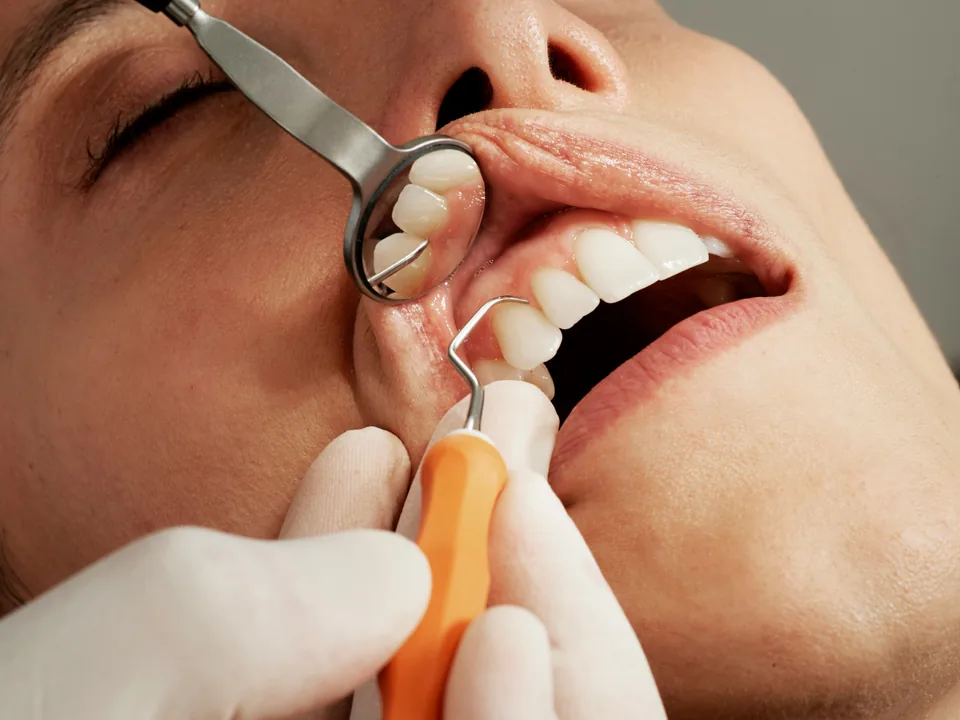
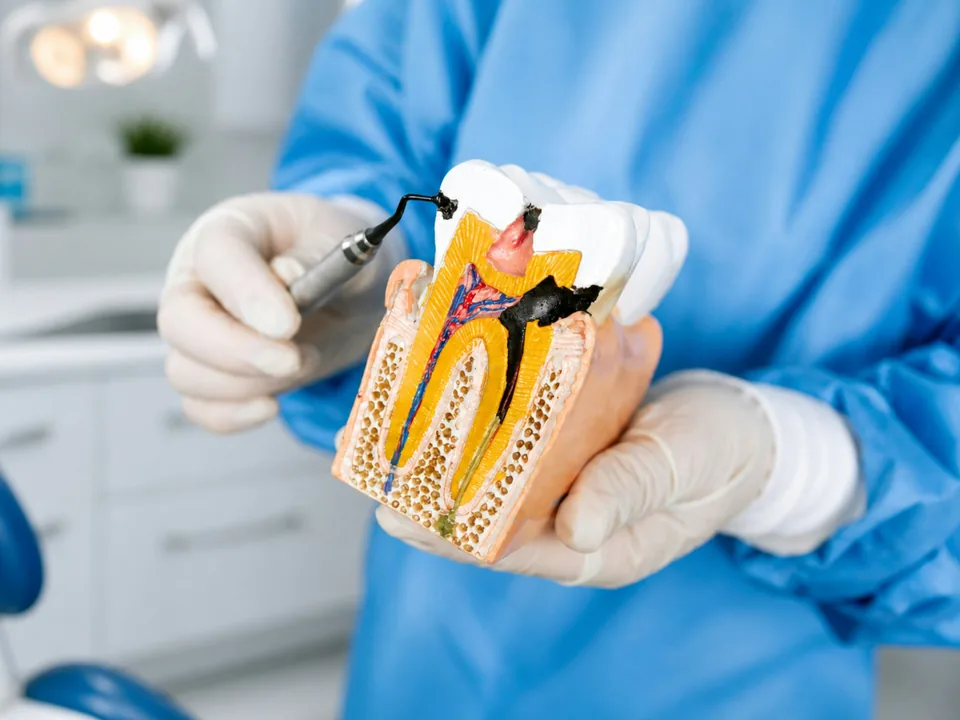
A root canal is needed when decay or a crack reaches the pulp, the nerve and blood supply inside the tooth. Once bacteria get in there, the infection has no way of clearing on its own. It travels down the root and into the bone, where it forms an abscess.
The procedure removes the infected pulp, disinfects and shapes the canals, and seals them. The tooth stays in your mouth and continues to function. The alternative is extraction, followed by an implant or bridge, which costs several times more and never quite matches the original.
Modern rotary endodontics with an electronic apex locator has changed what this feels like. Under proper local anaesthesia, most single-rooted teeth are completed in one sitting of 45–60 minutes, and patients routinely say it felt like having a filling done.
You probably need this if…
- Sharp pain when you bite down on a particular tooth
- Lingering sensitivity to hot or cold that stays after the stimulus is gone
- Throbbing pain that wakes you at night
- A swollen or tender gum, or a small pimple-like bump near the tooth
- A tooth that has darkened compared to its neighbours
- Pain that stopped by itself after being severe, often a sign the nerve has died
Recognising two or more of these does not confirm a diagnosis. It means an examination is worth booking before the problem gets more expensive.
How the treatment works
- 01 Diagnosis and X-ray
A periapical radiograph confirms the extent of infection and the root anatomy. Pulp vitality testing distinguishes a tooth that needs a root canal from one that needs a filling.
- 02 Anaesthesia and isolation
Local anaesthesia, then a rubber dam isolates the tooth. The dam is not optional because it keeps saliva and bacteria out of the canal being disinfected.
- 03 Access and cleaning
Rotary NiTi files clean and shape the canals to their full working length, measured with an electronic apex locator rather than estimated.
- 04 Disinfection and obturation
Irrigation with sodium hypochlorite, then the canals are sealed three-dimensionally with gutta-percha.
- 05 Crown
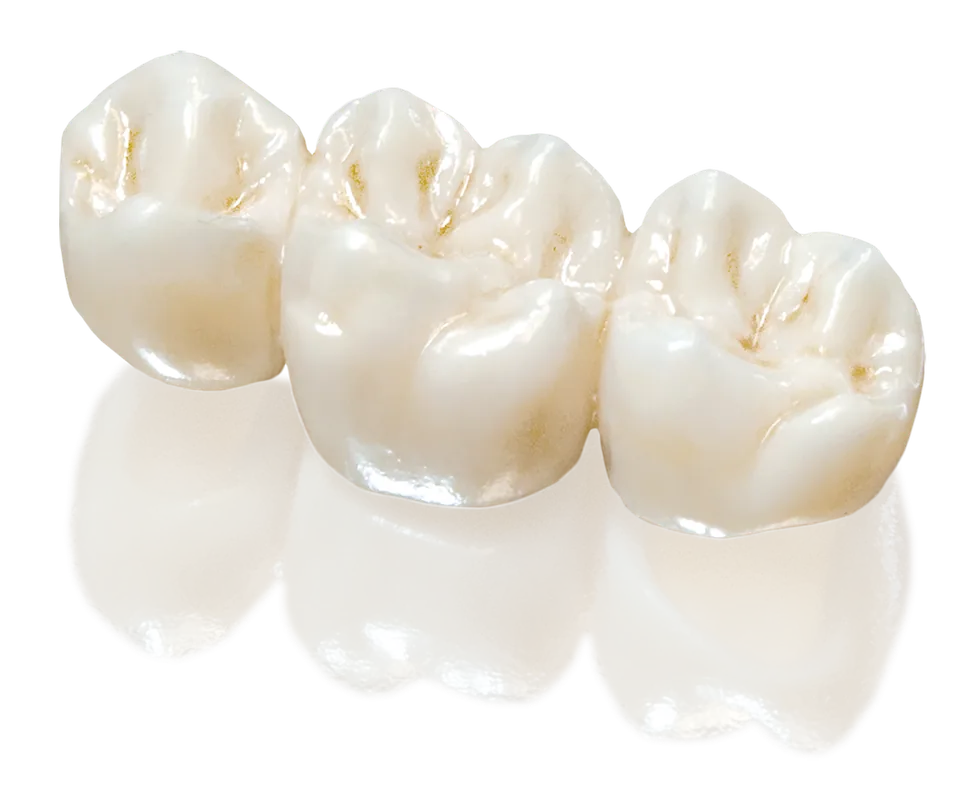
A root-treated back tooth is brittle and will fracture without a crown. This is a required part of the treatment, not an upsell. A cracked root-treated tooth cannot be saved a second time.
What root canal treatment costs in Lucknow
Root canal treatment cost in Lucknow depends on which tooth needs treatment, the complexity of its canals and whether it has been treated before. A restoration or crown after RCT can be a separate part of the overall cost, so consider the complete plan for saving the tooth.
Your written estimate sets out the recommended treatment and any separate charges. The guide below explains what to check before agreeing to the plan.