The missing tooth you have been ignoring is costing you more every year
A missing back tooth is easy to live with. You chew on the other side, nothing hurts, and nobody can see it. Two years pass without any event that forces a decision.
That is exactly the problem. Everything that goes wrong after an extraction goes wrong slowly enough that no single day is the day you notice.
What happens in the space
The bone starts disappearing. Alveolar bone, the bone that holds teeth, exists to bear the load transmitted through tooth roots. Remove the root and the stimulus is gone. Roughly 25% of the ridge width is lost in the first year, and the process continues, more slowly, indefinitely.
This is the single most important fact about tooth loss, and it is the one nobody explains at the extraction appointment.
The neighbours move. Teeth are not fixed in bone; they are suspended in a ligament and they migrate towards space. The tooth behind the gap tips forward, the tooth in front drifts back, and the contact points between them open up, creating exactly the kind of food trap that starts new decay in teeth that were previously healthy.
The opposing tooth over-erupts. The tooth in the other jaw has nothing to bite against, so it grows down into the space. Over a few years it can descend far enough that it interferes with the bite and, in bad cases, has to be reduced or removed itself.
The load redistributes. You chew on one side. That side takes double the work, and over years you see accelerated wear, cracked cusps and sometimes jaw joint symptoms on the overloaded side.
Why waiting gets expensive
Discuss replacement early: the bone condition can affect whether additional preparation is needed and therefore the scope and cost of treatment.
Replace after two or three years: the ridge has narrowed and often needs grafting before an implant can be placed. The graft, or a sinus lift in the upper back region, adds to the cost and to the timeline, with three to six months of additional healing before the implant can go in.
Replace after the neighbours have drifted: the space is no longer the right size or shape for a tooth. Orthodontic treatment may be needed to reopen it before anything can be placed there, and the over-erupted opposing tooth may need reducing or root-treating and crowning.
The gap does not stay the same size and shape while you decide. It becomes a different, more expensive problem.
Signs it is time to act
- You have chewed only on one side for more than a few months
- Food packs into a specific space every time you eat
- A denture slips, clicks, or has to come out to eat properly
- Your face looks slightly collapsed or shorter around the mouth
- A tooth is cracked below the gum line and cannot be restored
- You have been offered a bridge and do not want two healthy teeth cut down
- Any extraction where nobody discussed replacement with you
Implant, bridge, or nothing
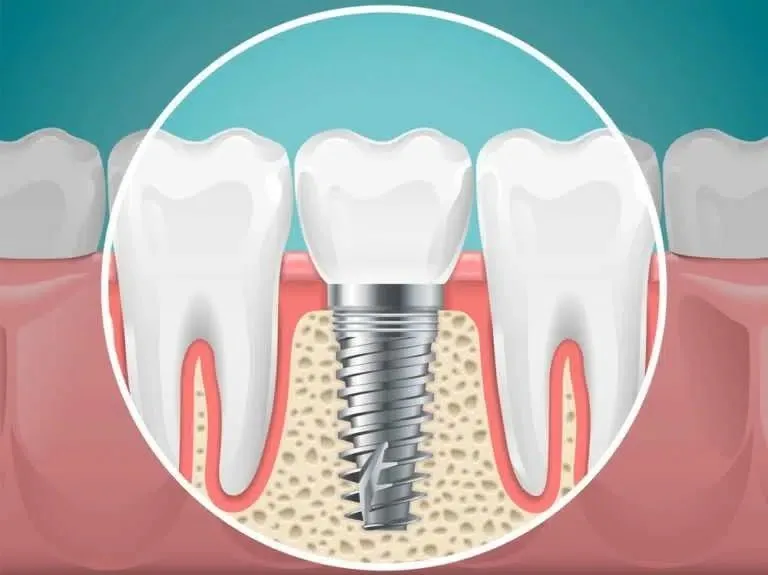
Implant. A titanium root plus a crown. Preserves the bone, does not touch the adjacent teeth, functions closest to a natural tooth. Takes three to six months because the bone has to fuse to it. The estimate should specify the implant, abutment and crown.
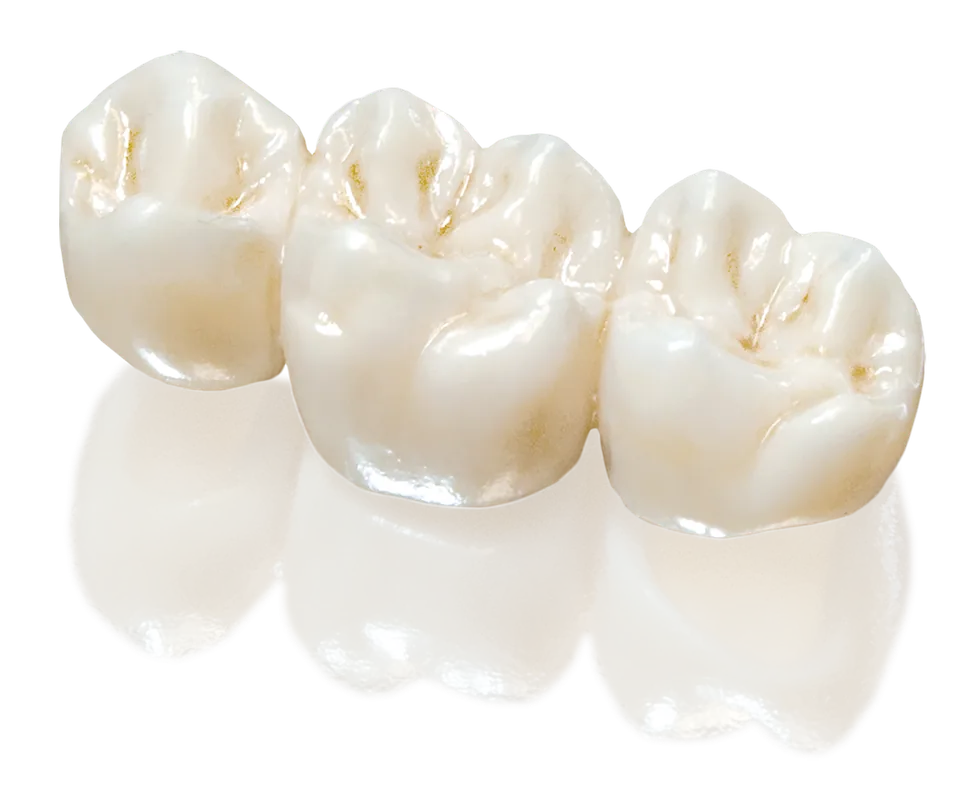
Bridge. Crowns on the teeth either side carrying a replacement tooth between them. Fixed in two to three weeks and cheaper upfront than an implant. The cost is that both adjacent teeth are permanently ground down, and the bone under the gap continues to resorb because nothing is loading it. A reasonable choice when those teeth already need crowns anyway.
Nothing. Legitimate only for wisdom teeth. For anything else it is a decision to accept drift, over-eruption and bone loss, all of which cost more to manage later than the replacement costs now.
What the process actually involves
A CBCT scan comes first. This is a 3D image that measures bone height, width and density at the site and maps where the nerve runs. Placement is planned digitally on that scan before anything is done, so the implant ends up where the crown needs to be rather than where the bone happened to be convenient. Guessing from a 2D X-ray is how implants end up angled wrong or too close to a nerve.
Placement itself is 30 to 45 minutes under local anaesthesia. Most patients drive themselves home and are back at work the next day, with mild soreness for two or three days. Then three to six months while the bone fuses, and a temporary tooth if the gap is visible. Finally a digital scan, a crown milled to match your natural shade, and it is done.
The one thing worth doing today
If you had a tooth extracted in the last year and nobody discussed replacing it, get the site assessed now rather than when it starts causing symptoms. Bone you still have is free. Bone you have to rebuild is not.